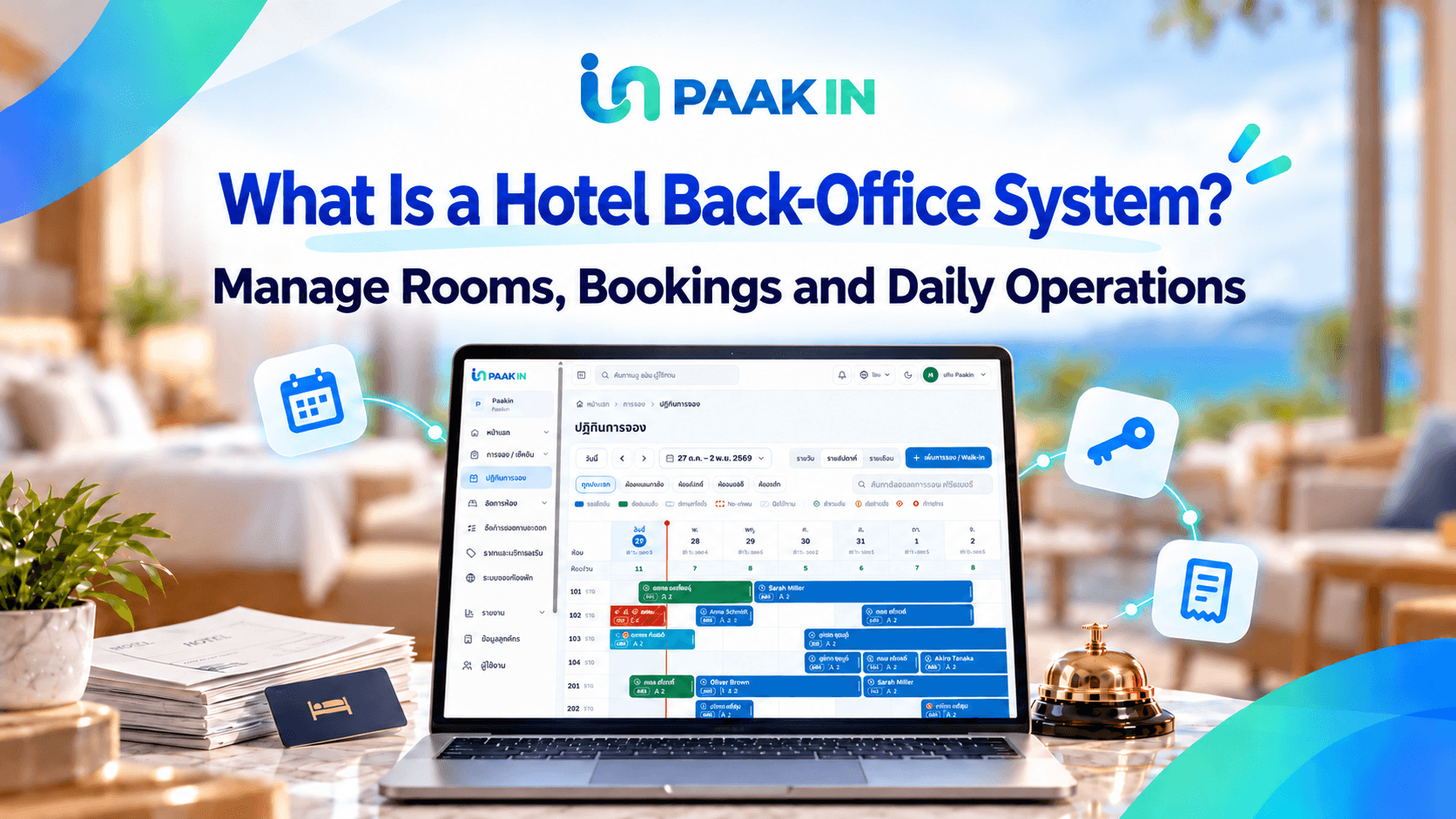
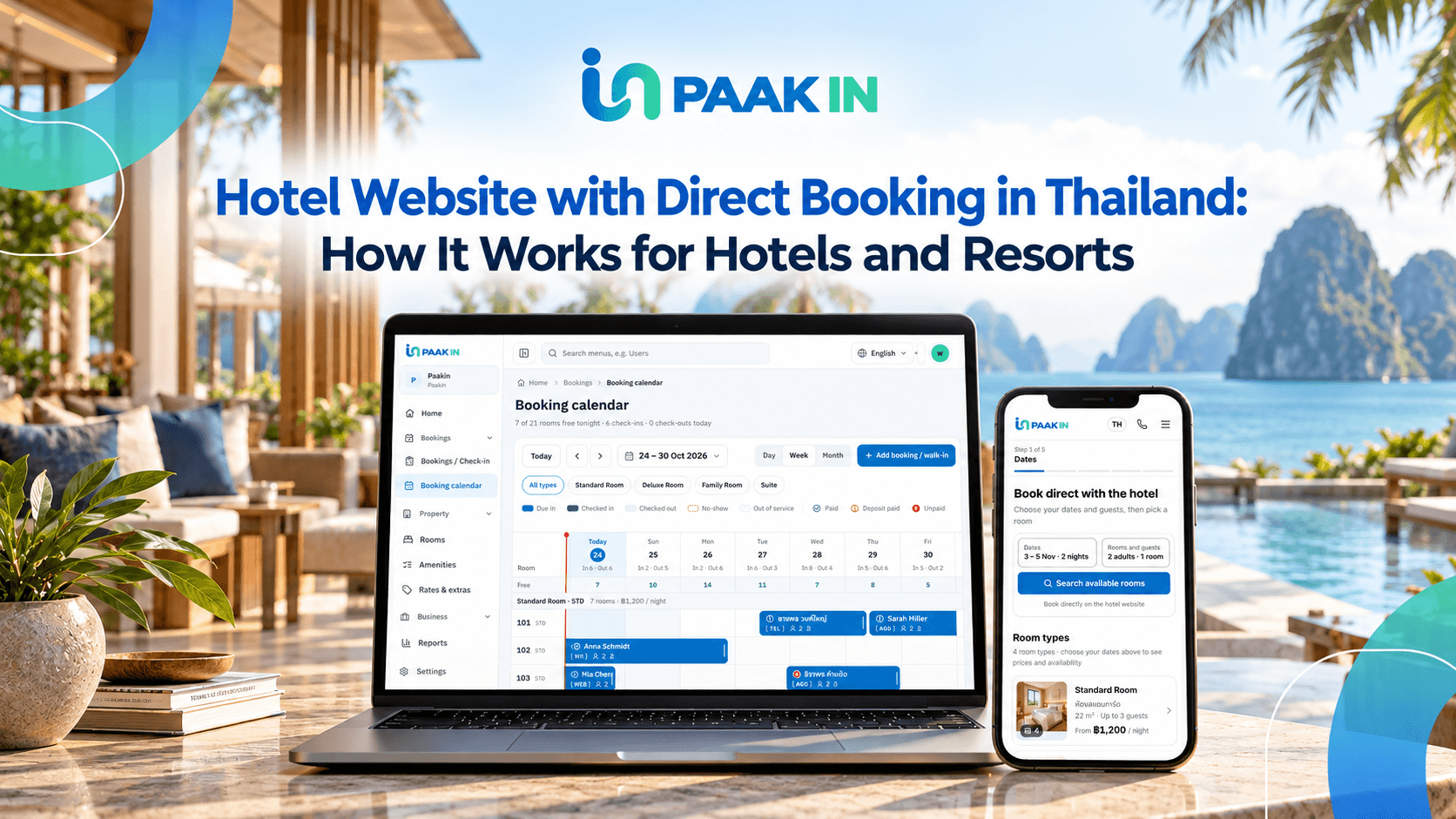
A hotel website should do more than show photos, room types and contact information.
If a guest likes your property, the next question is usually simple:
Can I book it now?
For hotels and resorts in Thailand, combining a professional website with direct booking can turn the website from an online brochure into an actual booking channel.
Instead of sending every interested guest to a chat, an OTA or another platform, they can continue their booking journey directly from your website.
What does a hotel website with direct booking actually mean?
A normal hotel website may show rooms, facilities, location and contact details.
A website with direct booking goes one step further.
The guest can move from discovering the property to making a booking through a clear flow such as:
Choose dates → View available rooms → Select a room → Enter guest details → Complete the booking
Depending on the setup, the booking flow can also include payment or deposit options.
The important part is that guests do not have to stop halfway through the journey and message the hotel just to ask whether a room is available.
Why direct booking matters
OTAs such as Agoda and Booking.com can still be valuable channels for bringing new guests to your property.
Direct booking is not necessarily about replacing them.
It is about creating another booking channel that your hotel owns.
When someone already discovers your hotel through Google, social media, a recommendation or your existing customers, your website can give them a direct way to book.
This can help the hotel build a closer relationship with guests and reduce unnecessary dependency on third-party platforms.
With PAAK IN, there is no commission charged by PAAK IN per booking. Payment gateway fees may still apply depending on the payment method used.
The booking should not end at the website
A good direct booking experience is also about what happens after the guest submits a booking.
The hotel team still needs to know:
- who booked
- which room was selected
- check-in and check-out dates
- guest contact details
- booking status
- payment or deposit status
This is why the website, direct booking flow and booking management should be considered together.
Instead of receiving a booking and manually copying the information into another spreadsheet, the goal is to make the booking easier to manage from the hotel side as well.
For accommodation businesses that are still using several chats, spreadsheets or manual records, this can become increasingly useful as booking volume grows.
What should you look for before building one?
You do not necessarily need the biggest hotel system available.
Start with the guest journey and the way your property actually operates.
Before choosing a provider, check whether the solution can support:
A clear room presentation
Guests should quickly understand room types, occupancy, pricing and important details.
A mobile-friendly booking flow
Many guests discover and book accommodation from their phones.
Direct booking
The guest should have a clear path from viewing a room to completing a booking.
Booking management
Your team should be able to see and manage booking information without creating unnecessary manual work.
Room to grow
If your operation later requires additional integrations or hotel systems, these can be evaluated based on your real needs rather than adding everything from day one.
If you are still deciding what kind of hotel website you need, you can also read Hotel Website Design in Thailand: What Foreign Hotel Owners Should Look For.
Website + Direct Booking with PAAK IN
PAAK IN provides website and direct booking solutions for hotels, resorts, villas, hostels and other accommodation businesses in Thailand.
The goal is simple:
Help guests discover your property, understand your rooms and book directly.
A project can combine a hotel website, direct booking flow and booking management based on the needs of the property.
More advanced requirements or integrations can be assessed separately instead of forcing every hotel into the same system.
You can explore PAAK IN in English to see our hotel website and booking solutions.
A hotel website does not need dozens of complicated features to be useful.
It needs to make the journey from “I like this property” to “I booked this property” as simple as possible.